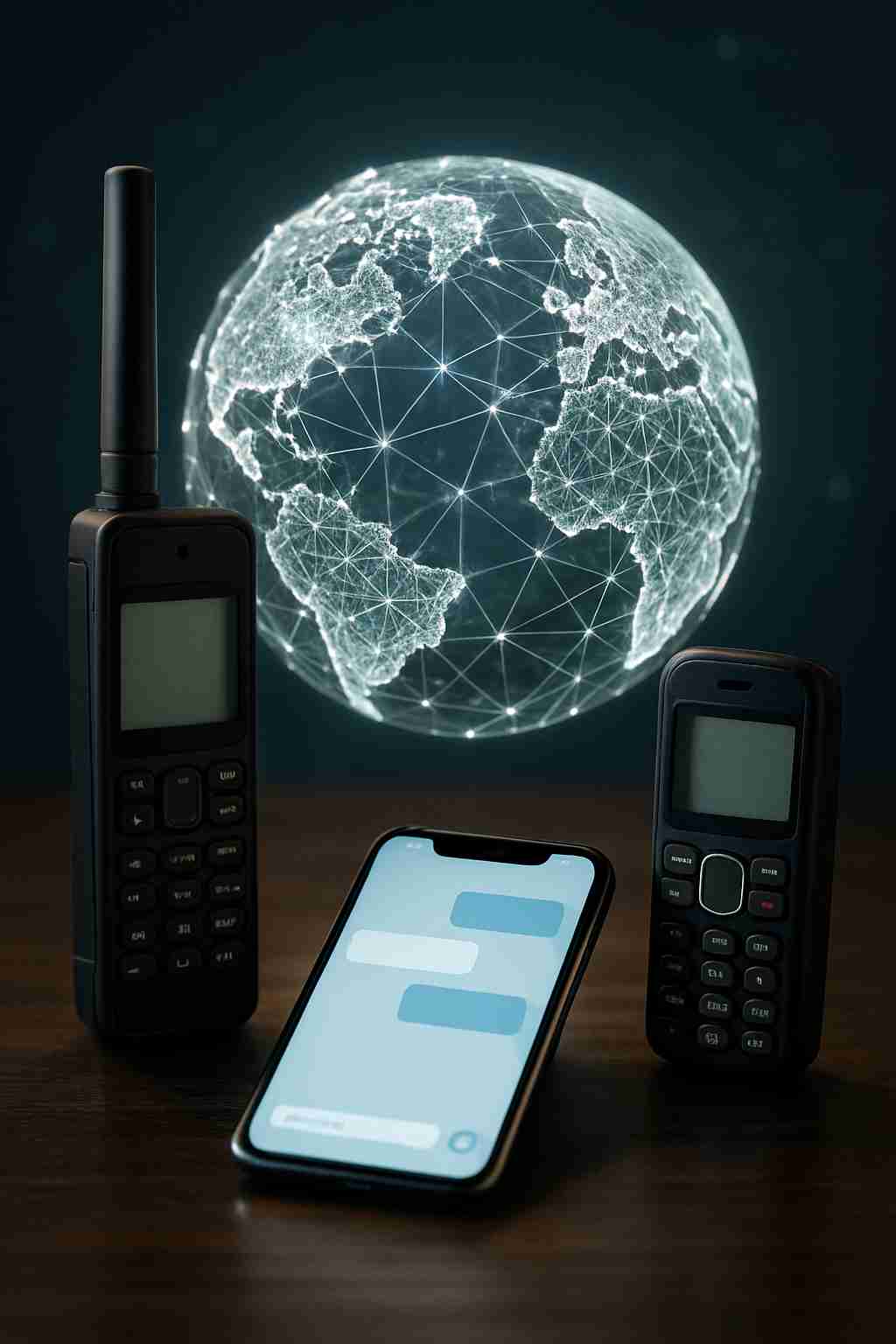



Remember When Talking Was Just…Text?
There’s something quietly brilliant about sending a message and getting one back. No ringing. No talking over each other. Just words—clear, direct, and reliable. In a world full of flashy apps, glitchy voice notes, and disappearing stories, two-way text communication has managed to stay oddly dependable. Even comforting.
Now imagine that same simplicity—but off the grid.
No towers. No Wi-Fi. No data plan draining your wallet. Just you, a pocket-sized device, and the ability to stay connected with the people who matter, no matter where you are.
Let’s talk about how two-way text communication devices are quietly rewriting the rules of connection—from backwoods trails to blackouts in the suburbs.
Wait—What Is Two-Way Text Communication, Technically?
Alright, let’s break it down.
Two-way text communication simply means you can send and receive messages—without needing the internet or a phone line. Think SMS, but stripped down to the essentials, and often running on mesh networks or radio frequencies instead of cell infrastructure.
These devices are usually built around LoRa (long-range) radios or similar technologies, and many pair with your phone through Bluetooth. You type a message in the app, hit send, and it shoots off—hopping across nearby devices until it reaches the recipient.
It’s like passing a note in class, except your classroom is a mountain ridge, or a flooded neighborhood, or just a festival where the cell towers are melting down.
Why Is Everyone—from Hikers to Ham Operators—Into This?
You might assume these are niche tools. Something only for survivalists with bug-out bags and six kinds of paracord. But lately? Not even close.
Two-way text communication is becoming the go-to for:
- Backpackers who want to check in from the trail without paying $300/year for satellite messengers.
- Parents who want their kids to stay reachable at camp or a theme park—but without handing over a smartphone.
- Crews and teams working on farms, in forests, or across spread-out job sites where cell service is spotty.
- Disaster relief groups that need real-time coordination when the grid fails.
And you know what? A growing chunk of people are just using it as a quiet, private, and low-tech way to stay in touch—free from data snoops, message limits, and flaky reception.
The Charm of Going Low-Tech (But Not Dumb-Tech)
There’s something refreshingly human about keeping it simple.
While everyone else is stuck dealing with apps that won’t load, push notifications gone wild, or battery-killing group chats, folks with mesh-based text devices are calmly sending updates like:
“We’re at campsite 4. Firewood stacked. All good.”
No drama. No spinning wheels. Just calm, clear communication.
These systems don’t rely on the cloud or massive corporate servers. Your message stays between you and the people you’re talking to—secure, encrypted, and off the beaten path. It’s like old-school CB radio got a text upgrade and decided it didn’t want to be famous.
A Quick Tangent: The Rise of Mesh Networks
If you’re wondering how these devices pull this off, it’s largely thanks to mesh networks.
Here’s the gist: instead of sending messages to a central hub (like a cell tower), each device talks to nearby devices. Your message hops from one node to the next, like digital whispers in the wind, until it finds the right person.
This means no single point of failure. If one node drops off—dead battery, lost in a river, eaten by a bear (hey, it happens)—the rest keep things going.
It’s decentralization at its friendliest. Everyone contributes. Everyone benefits.
And the more people using the network, the stronger and more useful it gets.
It’s Not Just For Emergencies—But It Really Shines Then
We could talk all day about convenience, privacy, and freedom from data plans. But there’s another reason people fall in love with two-way text communication:
It works when nothing else does.
During power outages, hurricanes, and wildfires, cell towers often go dark. And satellite phones? Expensive, bulky, and not exactly beginner-friendly.
But these little radios keep buzzing along. No subscription fees. No data caps. Just pure peer-to-peer messaging that doesn’t rely on fragile infrastructure.
If you’re ever in a situation where the grid blinks out—you’ll be glad you threw one of these in your pack.
Okay, But What Are the Limitations?
Let’s keep it real. These devices aren’t magic.
- Range depends on terrain, antennas, and weather. Urban environments shrink it. Open areas stretch it.
- Battery life is good, but not infinite—you’ll want a solar panel or power bank if you’re out for days.
- Ease of use varies—some are super beginner-friendly, others require a bit of tinkering.
Still, the trade-off is worth it. You get local, reliable messaging without being tethered to a cell plan. And once you get the hang of things? You start wondering why we ever made texting so complicated.
Brands and Devices That Are Worth a Look
There’s no one-size-fits-all, but a few names pop up again and again in the space:
- Meshtastic-compatible devices from LilyGO and Heltec (open-source, versatile, enthusiast-friendly)
- Spec5 Pulse and Relay (great rugged options with real-time voice and text features)
- GoTenna (more commercialized, sleek interface, known brand)
- Beartooth (solid build, integrated radio features)
Some are plug-and-play. Some require flashing firmware and joining a Discord server or two. But once they’re up and running? You’re in a different league.
Start with two devices, test them locally, then scale as needed. Add a relay node on your roof or in your truck. You’ll be surprised how useful they become—even in your daily routine.
So Why Isn’t Everyone Using These Yet?
Funny thing—most people don’t even know this tech exists.
We’ve gotten so used to our phones doing everything that we forget they’re only as good as the signal they’re riding on. Once the towers disappear, that $1,200 slab of glass becomes little more than a flashlight and a note pad.
Two-way text communication devices flip the script. They give you messaging without the strings. And they remind you that staying connected doesn’t always need to involve five apps and a data bill.
Final Thought: Texting on Your Terms
Let’s zoom out for a second.
Communication isn’t just about apps and screens. It’s about peace of mind. It’s about sending one quiet message—“I’m here”—and knowing it’ll land.
Two-way text communication isn’t trying to replace your phone. It’s trying to fill the gaps where your phone fails. It’s a backup. A lifeline. A choice.
And once you’ve felt that kind of freedom—texting without limits, without tracking, without needing permission—you won’t want to go back.
Whether you’re hiking, prepping, farming, exploring, or just tired of being “always connected,” maybe the future isn’t more noise. Maybe it’s fewer bars—and better messages.