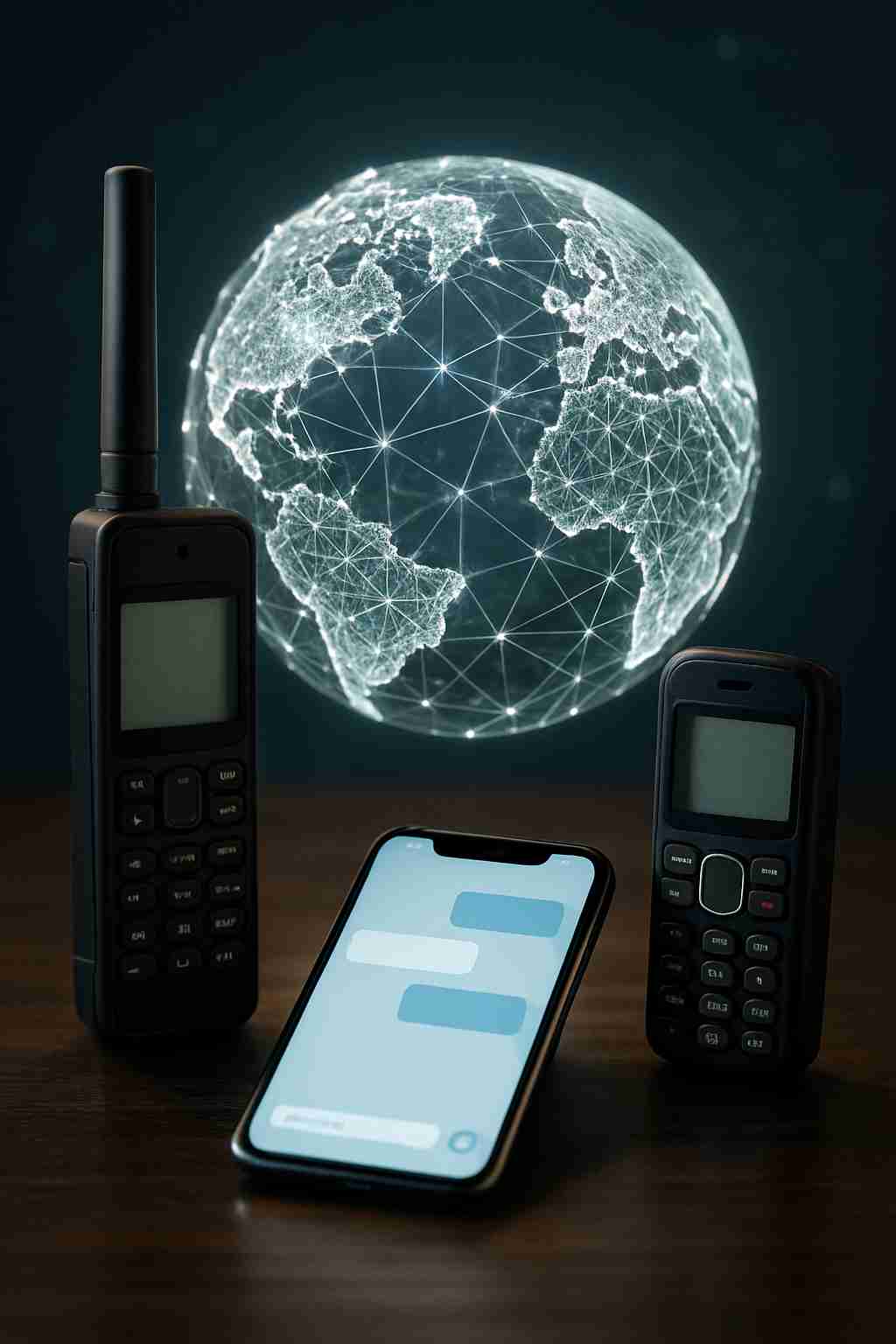


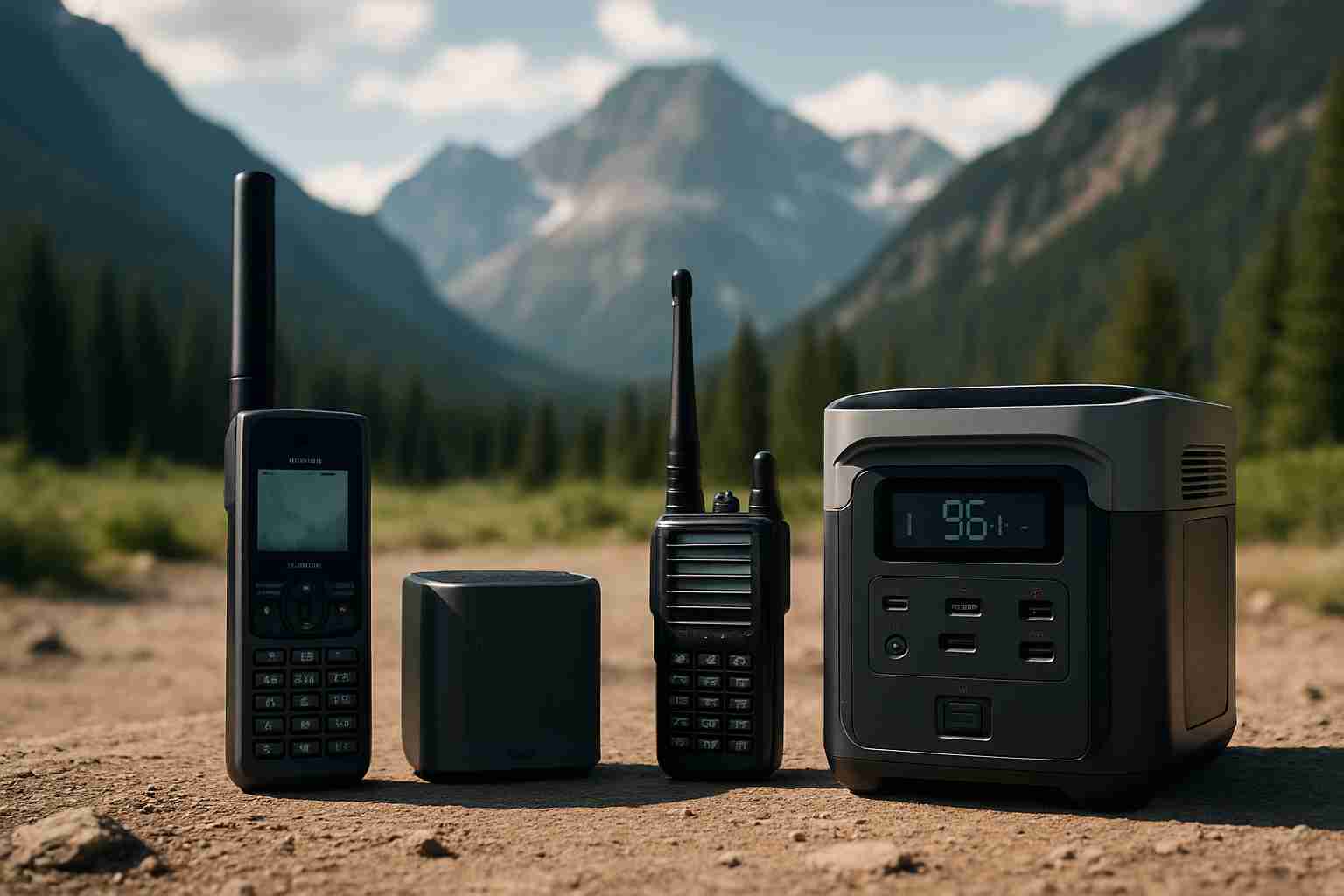
In a world that is often unpredictable, keeping in touch remains crucial, even when traditional infrastructure is unavailable. Reliable options for maintaining communication in isolated regions come from remote communication equipment such as satellite phones, wireless mesh network systems, two-way wireless communication, and compact power units. This article takes a closer look at these intriguing technologies, examining how they improve independent connectivity and deliver uninterrupted communication solutions.
Understanding Off-Grid Communication Essentials
In today’s increasingly connected environment, ensuring communication in distant locations is vital. Remote communication equipment, including off-grid communication devices, are engineered to fill this void without relying on conventional infrastructure. Mesh networking solutions play a significant role in this arena by linking several devices into a unified network. Signals are redirected through numerous nodes in these networks, forming a strong mesh of connectivity. This concept can also be applied to improve Wi-Fi range inside residences or to set up communication over expansive, secluded areas where typical signals fail.
These innovative standalone communication devices go beyond basic functions, enabling users to remain connected across great distances. They depend on durable technology to support communication, which is essential for outdoor explorers, remote professionals, and emergency responders alike. Furthermore, mesh networking technology built into these devices often guarantees uninterrupted service. As advancements continue, these autonomous communication tools evolve by addressing geographic hurdles with pioneering antenna designs, satellite integration, and sophisticated algorithms, making seamless communication more attainable than ever before.
Satellite Phones: Bridging the Connectivity Gap
Satellite phones have established themselves as essential tools in worldwide communication by providing a dependable connection where standard networks fail. Bypassing all local infrastructure, these devices link directly to satellites. Unlike conventional cell phones dependent on terrestrial towers, satellite phones maintain uninterrupted communication through networks of orbiting satellites. Global coverage is mainly supported by two satellite types: geostationary satellites that remain fixed above a particular Earth location, and low Earth orbit (LEO) satellites that swiftly orbit the planet. Notably, LEO satellites deliver consistent coverage and reduced latency, which suits voice calls and data transmission even in the most remote locations. Initially rooted in military applications, satellite phones now cater to a broad spectrum of needs—from aiding humanitarian missions to enabling adventurous explorations.
Nonetheless, despite their impressive satellite phone capabilities, these devices have certain drawbacks. A clear sky view is essential, often limiting functionality in dense urban or forest environments. Moreover, satellite phone pricing and functionality tend to be considerably steeper compared to ground-based mobile networks. Looking ahead, integrated satellite communication networks that combine satellite connectivity with local systems promise more robust communication solutions. Remote communication equipment such as satellite phones will persist in closing connectivity gaps, evolving with the demands of an increasingly interconnected world.
Mesh Networking Devices: Dynamic Connectivity in Complex Terrains
Mesh networking devices are transforming remote communication equipment by establishing networks without relying on any centralized infrastructure. By dynamically interconnecting devices, they form autonomous repair mesh networks that can route data through multiple pathways, guaranteeing connectivity even if certain nodes go offline. Their flexible nature renders them invaluable as independent communication systems in intricate environments, whether urban or rural.
The greatest strength of these mesh networks lies in their adaptability and dependability. Instead of depending on a central hub like traditional networks, these distributed mesh communication technology systems persist through conditions where some nodes may be lost. This feature makes them perfect for sustaining strong communication throughout difficult terrains, spanning both thickly populated cities and expansive countryside.
Wireless mesh network systems stand out for their straightforward installation and scalability. They have the capability to expand Wi-Fi reach across whole neighborhoods while seamlessly integrating with existing setups. Meanwhile, protected wired mesh networks, though less prevalent, offer boosted security and faster speeds by utilizing physical links while preserving the mesh network systems’ dynamic traits.
Critical for ensuring uninterrupted, dependable communication, these networks prove essential during outdoor ventures, emergency services, or any circumstances where standard communication means are insufficient. Leveraging mesh networking devices, users obtain a robust communication framework vital for staying linked in the most distant and demanding settings. As standalone communication devices, they deliver a tactical edge in today’s increasingly interconnected world.
Two-Way Radios: The Reliable Backbone of Off-Grid Communication
Crucial to remote communication equipment, two-way radios deliver dependable short-range interaction where infrastructure is either limited or absent. Since their early days, these devices have advanced notably, adapting to diverse uses including emergency response, search and rescue communication, and outdoor expeditions. When conventional mobile signals falter, they become a vital link, helping teams maintain coordination in demanding conditions.
Several varieties of modern two-way radio transmission systems exist, each tailored to different requirements. Basic or conventional radios facilitate simple one-to-one or group communication over confined distances. On the other hand, trunked radio networks manage frequencies more effectively, reducing signal congestion and enabling faster connectivity across wider coverage areas. Duplex radio communication, which supports simultaneous sending and receiving, offers fluid and dynamic exchanges much like traditional telephone conversations.
The versatility of two-way radios shines through in numerous settings—be it organizing group endeavors in the great outdoors or overseeing extensive teams during urban rescue missions. By furnishing robust communication pathways, these radios establish the foundation for efficient coordination within remote communication equipment, enabling connectivity with minimal reliance on existing infrastructure.
Powering Communication: Portable Power Stations
In environments without access to the grid, ensuring reliable power for remote communication equipment such as satellite phones and mesh networking solutions is crucial. These days, mobile energy systems have advanced remarkably, becoming indispensable in such scenarios. Pioneers like EcoFlow and Anker lead this progress by designing innovative technology that keeps these gadgets functional.
Today’s compact power sources boast high-capacity lithium-ion power generators that provide robust energy output, often rivalling conventional generators but without the noise or harmful emissions. They feature an array of ports—USB, AC, and DC—to accommodate diverse charging needs. This versatility ensures critical communication hardware continues running in isolated regions where standard electricity is unavailable.
Solar compatibility has further elevated these portable photovoltaic power units. By harnessing energy from solar panels, they offer a green, sustainable charging alternative. This versatility assures dependable energy replenishment, even during extended missions. EcoFlow and Anker emphasize improving both efficiency and mobility, producing devices that are not only lightweight but also support rapid charging. Thanks to these innovations, staying connected through remote communication equipment remains feasible under the most challenging circumstances.
Conclusions
Maintaining connectivity beyond conventional infrastructure limits relies heavily on remote communication equipment. Users can guarantee effective communication in isolated regions by combining satellite phones, mesh networking solutions, bidirectional radio communication, and mobile energy systems. Not only do these technologies bridge gaps in connectivity, but they also improve safety, reliability, and readiness across a variety of standalone communication scenarios.