



As a foundation of contemporary communication networks, radio communication enables wireless data transmission over extensive distances. This piece explores radio communication systems, radio transmission devices, and the wireless communication technology that underpins this vital communication mode, offering perspectives on the current global communication solutions and services that enable worldwide connectivity.
The Foundations of Radio Communication Systems
At the core of wireless communication technology is the complex interaction of radio waves transmitting information through the atmosphere, connecting places once thought unreachable. Key elements involve a transmission and reception system that turns the message into a signal, an antenna broadcasting it into the environment, and a receiver that converts these waves back into sound or visual data. The pioneering moment came in 1901 when Guglielmo Marconi transmitted the first transatlantic radio message, ushering in a new communication era that compressed distances and laid the groundwork for today’s telecommunications.
Marconi’s achievement sparked the evolution of technology from simple spark-gap transmitters to the radio communication technology we rely on now. The critical transition from analog to digital radio transmission improved clarity, reliability, and bandwidth usage — all vital in this data-centric time. At the same time, advances in techniques for signal modulation and radio frequency signal processing fortified these wireless communication systems against interference and noise.
Thanks to those early breakthroughs, our world benefits from uninterrupted information exchange—a tribute to the enduring power and flexibility of radio signal communication systems. As this sector advances, such systems remain the foundation of our connected global communication networks.
Diverse Devices in Radio Communication
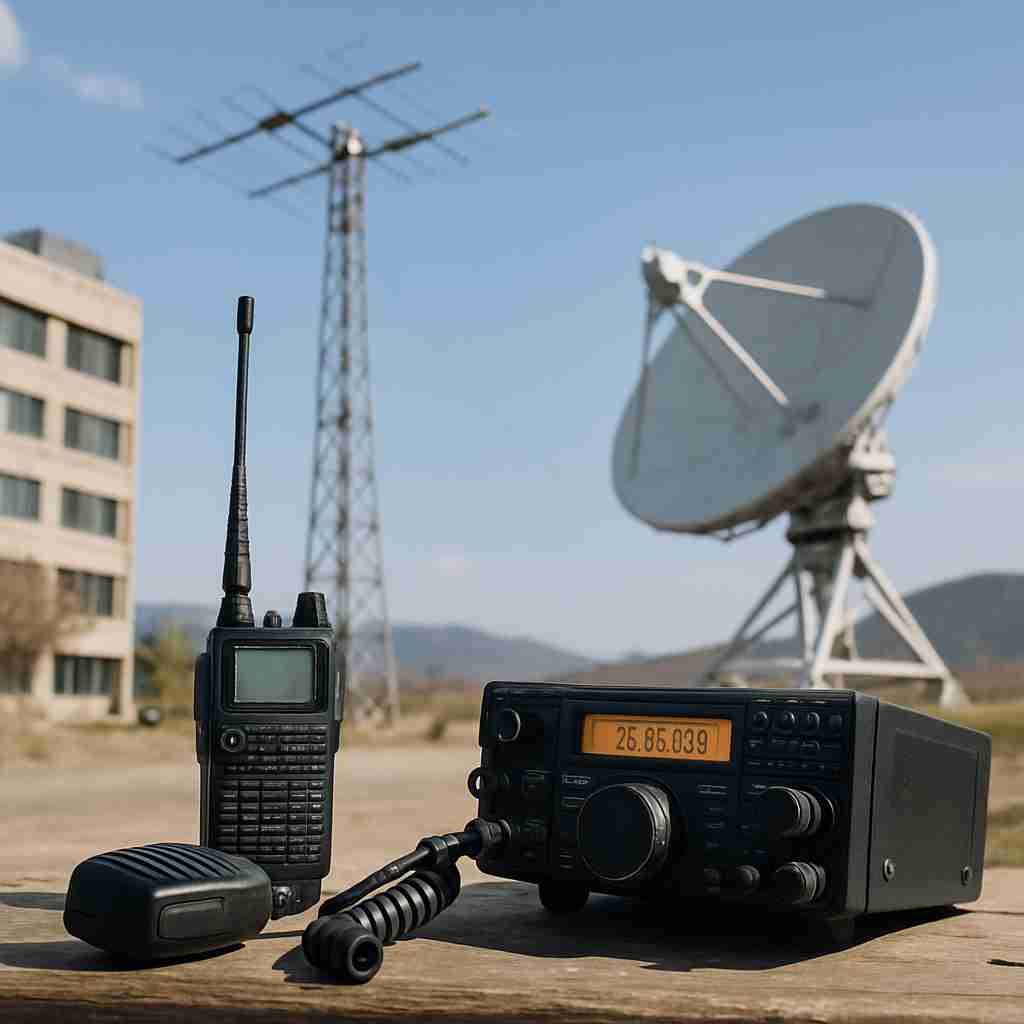
Within the varied realm of radio communication systems, equipment such as transceivers, antennae, and handheld radios play a pivotal role across numerous industries. Transceivers, which handle both transmission and reception of signals, form the backbone of radio communication systems, delivering dependable performance in sectors like aviation and maritime. Antennae, vital for efficient signal sending and capturing, have transformed with sleek designs that boost functionality even in tough conditions. Their growing presence in consumer gadgets supports everything from automobile radios to intricate mobile network infrastructures.
Handheld radios, prized for their compactness, prove essential to emergency services by enabling reliable communication during critical moments. This portability also serves military applications where rugged construction and encrypted wireless communication guarantee safe information exchange. Over time, these radio transmission devices have advanced greatly. Today’s transceivers are more compact yet powerful, antennae operate with higher efficiency, and handheld radios incorporate features such as GPS integration. This progression reflects the increasing demand for reliable and mobile communication networks, showcasing the continuous innovation and flexibility in the radio communication technology sector.
Advancements in Radio Communication Technology
The progress made in wireless communication systems has elevated both network performance and accessibility to unprecedented levels. Software-defined Radio (SDR) is notable for its exceptional versatility, as it enables signal handling through software instead of relying on hardware, allowing swift adjustments to new protocols without needing to modify the actual device. This flexibility facilitates the effortless integration of varied communication standards, enhancing interoperability between networks and devices.
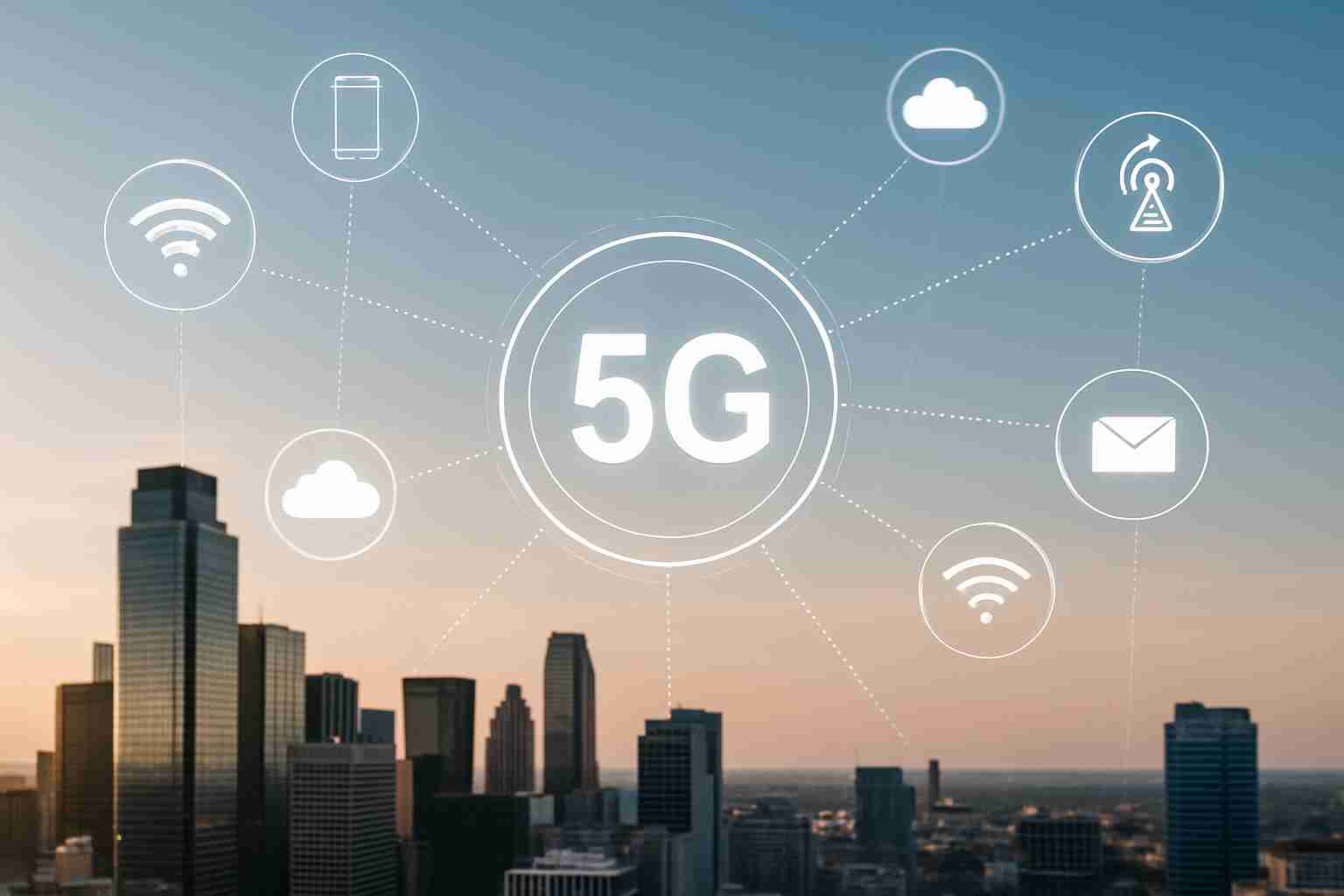
Radio Access Technologies (RAT), including LTE and the emerging 5G networks, boost data transmission by optimizing spectrum resource coordination, prioritizing user connections, and enabling greater bandwidth capacities. These innovations drastically enhance network throughput expansion and reliability, critical for the worldwide integration of IoT devices. This interconnected ecosystem supports everything from intelligent home gadgets to sophisticated industrial machinery, assuring strong connectivity even in highly congested environments.
Cutting-edge technologies like 5G demonstrate the evolution of conventional wireless communication systems, utilizing innovative modulation schemes and scalable massive MIMO architectures. Consequently, these advancements provide faster data rates, reduced latency, and a significantly larger number of connected devices, reshaping how data is distributed and retrieved across extensive networks. As these technologies advance further, connectivity horizons will broaden, enriching daily communications and operations across numerous industries.
Essential Radio Communication Services
Wireless communication systems provide a wide variety of services that are essential to many elements of everyday life. These systems connect people by broadcasting music and news as well as facilitating smooth public safety communications. In emergencies, radio communication can serve as a critical lifeline—for example, through the Amateur Radio Emergency Service (ARES Amateur Radio Emergency Communications), where volunteers bolster response efforts during crises.
Service providers oversee the limited and shared radio spectrum to ensure efficiency and order. This task requires precise allocation and governance to reduce frequency interference, a common issue that can interrupt communications and lower service standards. Additionally, providers must comply with complex regulations, adapting to new policies and rules designed to make the spectrum more efficient for present and future demands.
Public safety depends heavily on services like the Terrestrial Trunked Radio (TETRA), which enable secure, dependable communication among police, firefighters, and emergency medical personnel. By managing these crucial communications, TETRA systems deliver the clarity and durability needed in intense situations, allowing first responders to coordinate effectively. With continuous advances in wireless communication systems, their importance in supporting society’s connectivity remains vital.
Innovative Radio Communication Solutions
In the domain of Innovative Radio Communication Solutions, firms such as Motorola and Airwave Solutions have transformed our perception of security and dependability within key operational environments. They provide integrated platforms that combine advanced communication technologies seamlessly, boosting efficiency across sectors including military, public safety, and commercial enterprises. These platforms are built upon carefully engineered radio communication systems known for emphasizing scalability and encryption.
Protecting communications in these fields is vital, and enterprises utilize cutting-edge encryption to safeguard confidential data from unauthorized breaches. The ability to scale ensures these platforms expand alongside organizational growth. As user numbers or data flow increase, these solutions adapt without losing performance.
Efficient network management is equally critical. Motorola, for example, delivers network management platforms that refine communication channels, guaranteeing the prioritized and smooth delivery of data. By implementing radio communication systems equipped with smart management protocols, organizations can fine-tune their communication frameworks, maintaining uninterrupted service during peak demand.
These state-of-the-art solutions exhibit not only technological excellence but also a significant progression in strategic communication for scenarios where every moment is invaluable.
Conclusions
Radio communication continues to be an essential element of the worldwide communication framework, consistently evolving alongside technological progress and growing connectivity demands. By exploring its systems, wireless communication equipment, and services, we gain a deeper understanding of its significant influence on contemporary life—from urgent communication platforms to daily interactions. As innovations in radio frequency communication technology progress, it will remain a fundamental part of our continually expanding global interconnected communication.