


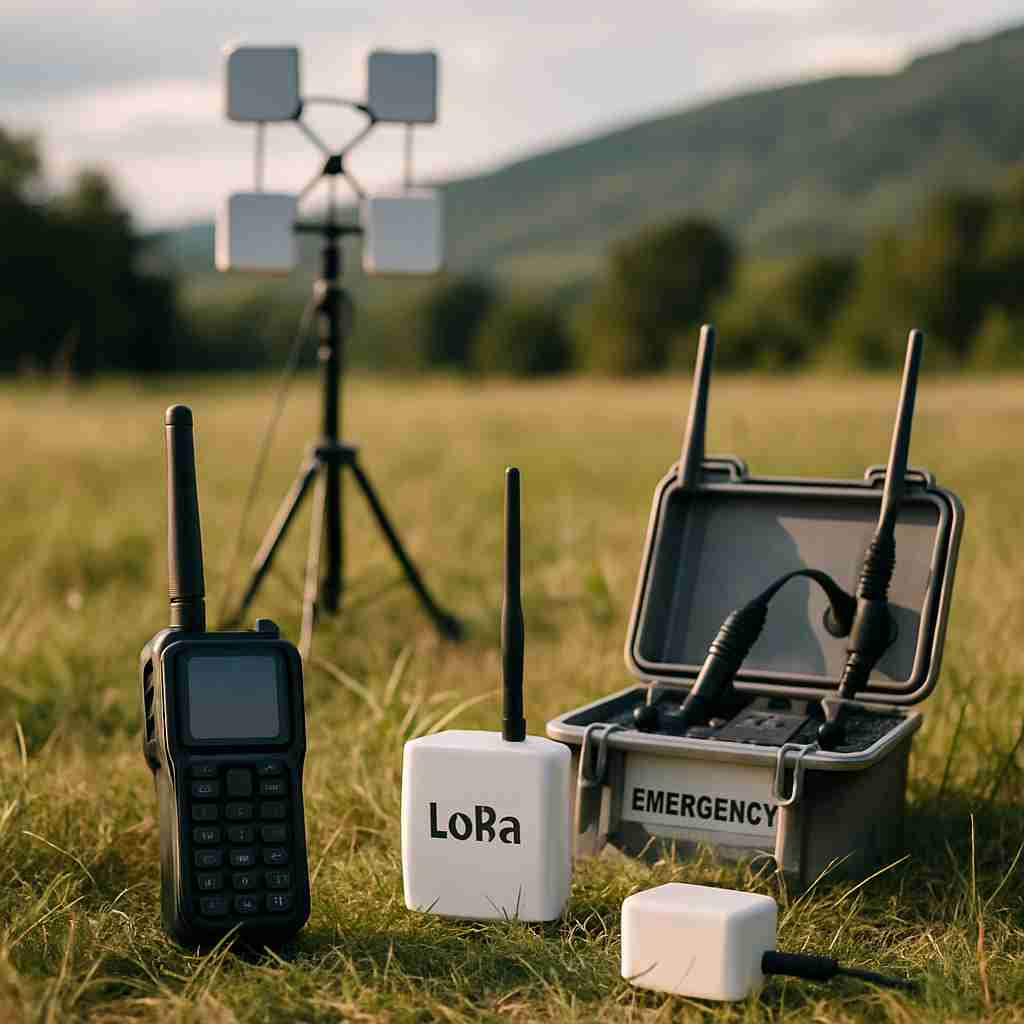
In today’s world, where digital communication reigns supreme, having dependable standalone communication systems is more important than ever. Thanks to innovations like LoRa, mesh networking communication, and distributed communication systems, staying connected during crises or in isolated regions is achievable. This article explores these groundbreaking technologies, offering essential perspectives on tools that guarantee communication regardless of your location.
The Evolution of Off-grid Communication Solutions
The history of independent communication equipment is a tale of necessity driving innovation. In the beginning, rudimentary techniques such as smoke signals and drum patterns served as primary methods for communicating across distances. These approaches gradually transformed into more advanced instruments like telegraphs and later, radio transmissions, which signaled the first move away from reliance on physical cables. Over time, dependency on existing infrastructure diminished with the introduction of portable satellite communication tools and handheld radio devices tailored for urgent scenarios and isolated explorations.
Further technological progress drastically changed these systems by incorporating digital networks and downsizing hardware. Present-day self-sufficient communication devices now feature capabilities that facilitate effortless communication over vast distances without the need for centralized telecom frameworks. Included in these innovations are mesh networking communication systems that allow devices to interact directly, eliminating traditional network intermediaries. The ongoing advancement of these technologies highlights their adaptability to contemporary connectivity needs. Current breakthroughs emphasize improving availability, power efficiency, and dependability, guaranteeing communication remains accessible even under the most demanding conditions, fundamentally transforming how communities handle emergencies and function in remote environments.
Understanding LoRa Technology
LoRa technology represents a significant breakthrough in independent communication equipment, mainly because of its low-energy, long-distance transmission capabilities. Built specifically for IoT deployments in distant regions, LoRa efficiently sends small packets of data across extensive ranges while drawing minimal power, which makes it essential for gadgets that cannot be frequently recharged. This capability enhances its application across industries such as farming, transportation, and city infrastructure. For instance, in farming, LoRa-enabled sensors for agriculture keep track of soil conditions and crop health, greatly improving resource management while covering broad areas. The logistics sector leverages LoRa’s ability to monitor assets over widespread terrains, ensuring seamless functioning even where connectivity is limited. In urban settings, it strengthens infrastructure by enabling smart city communication systems like streetlight control and waste management services. By implementing LoRa within these diverse fields, organizations and local governments sustain distributed communication systems without dependence on conventional frameworks. This pioneering strategy forms the foundation for the durability of independent communication equipment, allowing reliable, efficient data transfer where standard networks could easily fail.
Mesh Networking: A Backbone for Reliable Connectivity
Serving as a dependable backbone for connectivity, mesh networking plays a crucial role, especially within off-grid communication solutions. Unlike conventional networks, mesh networking systems feature an autonomous self-organizing design that enables flexible data routing and removes vulnerable single points of failure. Data transmission happens through each node’s interaction with its neighbors, generating several routes for sending information. This built-in redundancy safeguards a consistent connection even when certain nodes malfunction.
In metropolitan environments, these networks boost public Wi-Fi by delivering uninterrupted coverage over wide zones, aiding smart city communication systems. For rural environments, they offer essential rural connectivity services where traditional setups fall short, closing digital divides. When emergencies arise, mesh networking communication can rapidly reestablish links, especially if standard infrastructure collapses.
Their versatility is proven through practical applications. Temporary mesh networking systems help first responders coordinate effectively after natural calamities. In isolated regions, communities tap into mesh networking to obtain access to resources and services that would otherwise be inaccessible. This combination of resilience and flexibility firmly positions mesh networks as an indispensable part of off-grid communication solutions, greatly enhancing their dependability and impact across varied conditions.
Decentralized Communication Systems: An Overview
By distributing control among numerous nodes rather than depending on a single central authority, decentralized communication systems transform the way people share information. This method resonates with blockchain technology principles, wherein information is securely handled and authenticated by a network of computers. Users benefit from increased resilience as well as improved privacy and security through decentralizing communication. The network’s nodes function simultaneously as senders and receivers, guaranteeing system sturdiness even if one segment malfunctions. Eliminating single points of failure effectively reduces vulnerability to cyberattacks.
Privacy protection stands out as a significant benefit. Since there isn’t a central database prone to breaches, data tends to be more secure within distributed communication systems. The Tor network serves as an example by routing user traffic across multiple servers, which complicates tracking and safeguards anonymity. Likewise, BitTorrent demonstrates robustness and efficiency by enabling file sharing without reliance on a centralized server.
Decentralized systems have revolutionized communication across various sectors. For instance, blockchain is used in supply chain management to validate transactions transparently and securely. In crisis-stricken regions, independent communication equipment ensures critical connectivity when traditional infrastructures fail. The flexibility of distributed communication frameworks continues to drive innovation, offering an adaptable foundation for the dynamic demands of worldwide communication.
Emergency Communication Systems: Bridging Gaps
Ensuring safety and an effective response during crises hinges on the ability to communicate clearly. While traditional emergency notification systems have depended largely on one-directional communication methods such as broadcast alerts and sirens, these lack the responsiveness required during rapidly changing emergencies. In contrast, modern bidirectional emergency communication enables real-time dialogue and feedback, which accelerates response times and improves resource deployment. Incorporating independent communication equipment along with distributed communication systems greatly boosts these functions. Technologies like LoRa and mesh networking extend coverage outside standard infrastructure boundaries, guaranteeing connectivity in remote or infrastructure-damaged zones. For example, after Hurricane Maria in Puerto Rico, community-driven mesh networking systems allowed vital information exchange despite the main grid being offline. Likewise, these mesh communication networks have been critical during extensive incidents such as the California wildfires, where they provided firefighters with up-to-the-minute updates and coordination support. These instances highlight how independent communication equipment can effectively close essential communication gaps, ensuring reliable and resilient messaging even under severe conditions.
Conclusions
Technologies such as LoRa, mesh networking, and distributed communication systems are transforming connectivity in difficult settings by enabling independent communication equipment. These innovations provide dependable and adaptable communication during crises and in isolated areas, ensuring that vital data is transmitted without disruption. With the increasing dependence on uninterrupted connectivity, adopting these advanced solutions is crucial for both safety and operational effectiveness.