



In today’s interconnected world, extended distance wireless transmission plays a crucial role in overcoming vast expanses. Whether through wireless networking solutions or bidirectional radio communication systems, these technologies guarantee smooth voice and data exchange across wide regions. This article delves into a variety of long-range radio communication devices, revealing their underlying technologies and diverse uses for robust long-range network access.
Understanding Long-Range Wireless Communication
Extended distance wireless transmission plays a crucial role in today’s technology landscape, providing uninterrupted connectivity over large expanses without relying on physical cables. Among the various technologies enabling this, LoRa and Free-space optical communication distinguish themselves with their distinctive methods, benefits, and diverse use cases.
LoRa, short for Long Range Radio, is a groundbreaking innovation within the Internet of Things connectivity services sector. Employing chirp-based spread spectrum signaling, it enables the efficient transfer of data across vast distances while maintaining low power consumption. This characteristic renders LoRa perfect for battery-operated devices deployed in remote locations. One notable strength is its ability to link devices over distances reaching up to 15 kilometers in open terrains, though this range often diminishes in urban zones due to barriers such as buildings.
LoRa’s functionality significantly advances industries like agriculture, logistics, and city planning. For instance, in agriculture, it supports smart agriculture systems that track soil health, monitor livestock, and manage irrigation. By delivering real-time insights, LoRa empowers farmers to make data-driven choices, maximizing resource usage and boosting crop output. In logistics, it facilitates precise asset monitoring, ensuring prompt deliveries and effective inventory oversight, which in turn improves supply chain clarity and cuts expenses. Urban planners leverage LoRa networks to deploy wireless networking for smart cities, overseeing streetlighting, air quality, and waste management—contributing to sustainable and efficient metropolitan environments.
Conversely, Free-space optical communication (FSO) transmits data via light beams through the atmosphere. This line-of-sight optical technology achieves ultra-high data throughput similar to fiber optics but avoids the complexities of physical cabling, making it ideal for metropolitan areas where cable installation is expensive and difficult. FSO systems comprise a laser transmitter paired with a receiver that must be accurately aligned to deliver optimal results. The foremost benefit of FSO lies in its capacity to offer rapid communication free from radio frequency interference.
FSO excels where rapid setup and expansive bandwidth matter most. It finds extensive use in telecommunications to close network gaps in urban zones, supplying backhaul links and disaster recovery capabilities. Moreover, in logistics, FSO connects locations lacking infrastructure, while urban planners utilize it to meet the surging data demands of smart cities. By delivering low-latency, high-speed links, FSO enhances traffic control systems, strengthens public safety networks, and improves surveillance operations.
Both LoRa and FSO underpin a variety of sectors by guaranteeing dependable and efficient data exchange. They significantly contribute to the evolution of smart cities and precision agriculture technology, supporting environmental oversight and resource optimization. These innovations in wireless communication systems open doors to new opportunities, from enriching connectivity in remote communities to fulfilling the towering data needs of dense urban centers.
Together with long-range communication devices, these technologies are revolutionizing industrial operations, rendering them more agile and responsive. Whether through LoRa’s broad Internet of Things connectivity services or FSO’s swift optical data links, the trajectory of wireless communication is promising—offering improved efficiencies that transcend conventional limits and transforming the way information traverses distances. This progress equips industries to overcome challenges, refine processes, and inspire innovation in an ever more interconnected world.
The Role of Long-Range Two-Way Radios
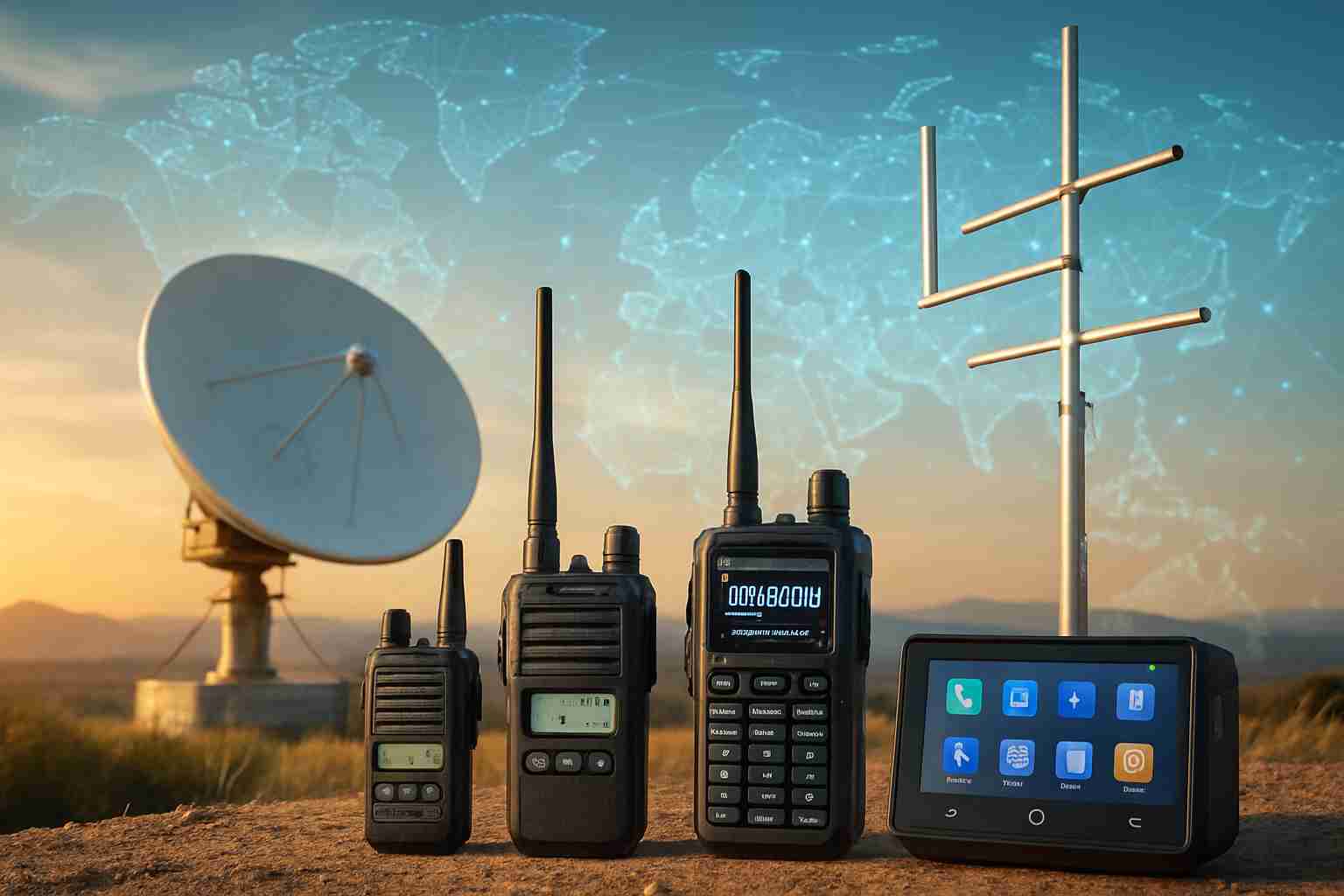
Extended-distance wireless transmission devices serve as essential tools for direct voice interaction over expansive ranges, especially in scenarios where alternative communication methods might fail. Specifically designed to overcome physical barriers and infrastructure constraints, these units provide reliable communication exactly where it’s crucial—within maritime, aviation, and emergency contexts. By employing dedicated frequency bands, such as the 169 MHz frequency utilized by Wize technology, these radios effectively break through obstacles hindering optimized distance communication in demanding environments.
Remarkable has been the advancement of bidirectional radio communication systems. At first, long-range communication depended on analog frameworks which, while revolutionary then, suffered from issues like reduced clarity and channel interference. Traditional models used amplitude modulation (AM) or frequency modulation (FM); despite their historical importance, they were vulnerable to interference and occasionally resulted in unstable connections over great distances.
The integration of professional digital radio communication systems has revolutionized the landscape of long-range radio communication. Contemporary radios leverage digital signal processing to heighten both speech intelligibility and transmission security. The shift towards sophisticated modulation methods—such as Frequency Division Multiple Access (FDMA) and Time Division Multiple Access (TDMA)—offers clearer signals and more efficient bandwidth use. This transformation not only enhances clarity but also expands capacity for concurrent users and enables secure, encrypted transmissions, a vital attribute in sectors demanding confidentiality.
In marine communication, for example, long-range two-way radios enable crucial, real-time exchanges between vessels and shore stations even when positioned far offshore. Maritime VHF communication devices generally operate on specific marine frequencies (commonly VHF and select UHF bands), guaranteeing clear channels for operational and safety purposes. These rugged radios are engineered to endure harsh sea environments, combining durability with advanced technological features.
The aviation sector depends on such devices for seamless coordination between aircraft and ground control, ensuring safety and efficient navigation. Aviation communication systems, specifically designed for air travel, primarily function within the 118-137 MHz frequency range. This dedicated spectrum minimizes interference and optimizes airwave usage, allowing continuous communication between pilots and ground personnel.
Emergency response radios represent another critical use case. For first responders, communication isn’t merely helpful but indispensable. Firefighters, paramedics, and law enforcement agencies rely on secure two-way communication radios to collaborate effectively during emergencies, utilizing networks like Project 25 (P25) and Terrestrial Trunked Radio (TETRA). These systems are crafted for voice and data transmission with encryption and interoperability across various agencies and locations, maintaining uninterrupted contact with command centers and substantially improving both response and coordination.
Modern long-range radio communication devices further enhance these features by integrating GPS technology, boosting situational awareness and enabling tracking capabilities. As industries become increasingly connected, these radios often interface with broader wireless networking platforms, facilitating smooth transitions between radio and other digital communication methods.
The careful evolution from analog to digital is evident in the latest models of long-range communication devices, which come equipped with features like improved digital voice quality and advanced noise cancellation. Such enhancements address operational demands and adapt to ever-changing standards, solidifying their importance in critical missions.
In conclusion, long-range radio communication units are far more than mere gadgets; they form indispensable elements of communication strategies across numerous high-pressure industries. By balancing rugged reliability with state-of-the-art technology, these radios ensure vital conversations proceed irrespective of distance or environmental challenges. With ongoing technological progress, these long-range communication devices are poised to evolve further, integrating increasingly sophisticated solutions to satisfy the communication requirements of the future.
Advancements in Long-Range Data Radios
The emergence of long-range radio communication has significantly transformed the wireless connectivity landscape, especially in fields such as military missions and remote monitoring. By allowing data to be transmitted over extensive distances, these radios become indispensable in areas where conventional communication infrastructure is absent or impractical.
At the heart of these long-range data radios lie sophisticated modulation methods and carefully chosen frequency bands. Techniques like Frequency Shift Keying (FSK), Phase Shift Keying (PSK), and Quadrature Amplitude Modulation (QAM) are fundamental in converting digital information into signals fit for wireless transmission. For example, FSK modifies the carrier wave’s frequency to match the digital input, PSK shifts its phase, and QAM merges both phase and amplitude changes to send higher volumes of data efficiently.
Equally important is the selection of frequency bands. Operating typically within VHF (Very High Frequency) and UHF (Ultra High Frequency) ranges, these radios strike a balance between coverage and data throughput. The propagation traits vary by band: UHF suits built-up urban areas with many obstacles, while VHF excels over longer, unobstructed distances.
Integration with IP-based networks forms a crucial feature of these long-range communication devices. Designed for seamless compatibility, they ensure secure and dependable data services, which is vital for surveillance tasks where real-time data exchange is paramount, as well as in telemetry systems dependent on uninterrupted data transfer from distant sensors.
In addition, innovations have enabled these radios to incorporate encryption and other security features essential for safeguarding sensitive data in unstable regions. Advanced error detection and correction mechanisms guarantee data integrity across long-range transmissions, counteracting signal degradation issues.
With the growth of IoT (Internet of Things) devices, long-range radio communication’s role in enabling connectivity even in isolated locations has widened its applications. In agriculture, for example, they support wireless sensor networks that track crop health and environmental factors, thereby enhancing responsiveness and efficiency in farming.
Moreover, these radios are crucial during disaster relief, providing rapid deployment of communication networks where existing infrastructure is damaged, facilitating coordination of aid and serving as a lifeline for those affected.
Looking ahead, the fusion of artificial intelligence and machine learning with these long-range communication devices promises to boost their capabilities further. AI can dynamically optimize modulation strategies, adjusting in real time to shifting environmental and atmospheric conditions to sustain stable and consistent communication links.
Ultimately, long-range data radios embody the combination of classic communication technology with the latest innovations. They stand as a foundational element of modern telecommunication in remote and demanding settings, showcasing a harmonious blend of resilient engineering and strategic adaptation to fast-evolving technology landscapes.
Innovations in Long-Range Communication Technologies
As we look ahead to the evolution of communication, two key breakthroughs are crucial in revolutionizing how we connect over extended distances: power-line communication and optical wireless communication. These technologies lead the charge in developing smarter, more efficient networks that directly confront challenges like bandwidth constraints and environmental disruptions.
Power-line communication, commonly known as PLC, offers a novel way to broaden communication reach by making use of the already existing electrical power infrastructure. The core benefit here is infrastructure optimization; instead of installing new cables or complex wireless systems, PLC transmits data via the widespread power grid. Thanks to recent progress in PLC technology, signal quality and transmission range have greatly improved, making it a practical option for both metropolitan and rural regions. It closes connectivity voids by integrating smoothly into the current electrical networks, providing dependable network accessibility even in isolated or difficult-to-reach locations.
This groundbreaking method of using power lines for communication aligns with the wider effort to develop intelligent energy management and modernize the grid. As the rise of Internet of Things (IoT) communication platforms and smart grids continues, PLC facilitates the vast data flows these systems produce. By leveraging advanced modulation schemes for power line communication and error correction algorithms, it effectively mitigates main issues like electromagnetic interference and signal weakening. Power-line communication not only extends communication network coverage but also enhances energy efficiency by enabling real-time monitoring and governance of electrical infrastructures.
Optical wireless communication (OWC) represents another cutting-edge advancement in extended distance wireless transmission. It harnesses the enormous, unlicensed spectrum within optical frequencies to deliver rapid data transfer without radio frequency disruptions. Utilizing light as the data carrier, OWC encompasses technologies such as Visible Light Communication (VLC) and Free Space Optics (FSO), each tailored to distinct uses and advantages. VLC is gaining traction for indoor usage, furnishing high-data connectivity while doubling as illumination, whereas FSO is ideal for outdoor scenarios, maintaining seamless network connections across cities without relying on physical cabling.
The rapid progress in OWC addresses one of the key hurdles in communication technology: the demand for increased bandwidth to support modern services like ultra-high-definition video streaming, augmented reality, and 5G wireless telecommunication services. Optical signals offer greater resilience against interception and electromagnetic disturbances, enhancing security and reliability, particularly in environments where conventional wireless connectivity might struggle.
Combined, these innovations signify a move toward more cohesive and intelligent long-range communication devices. As these technologies advance, they aim to overcome current network system limitations by providing scalable and eco-friendly solutions. This fosters a significant leap forward, ensuring that communication infrastructures can meet rising demands without sacrificing speed, reliability, or accessibility.
These developments in power-line and optical wireless communication perfectly complement the upcoming generation of long-range communication devices. By integrating state-of-the-art technology into everyday utility and communication frameworks, they empower both industries and users to surpass traditional boundaries of distance and connectivity. This seamless fusion represents more than just technological progress; it is a transformative stride toward a world where communication is as expansive, dynamic, and adaptable as the communities it serves.
Comprehensive Long-Range Communication Solutions
In the domain of long-range communication devices, all-encompassing solutions play a vital role in tackling the numerous challenges encountered by both enterprises and individuals. Rather than mere assortments of equipment, these solutions represent integrated platforms that merge diverse technologies to deliver dependable communication across extensive distances. Industry leaders like Motorola Solutions and Zenitel have set the benchmark by providing customized packages designed to address the specific requirements of various sectors.
Renowned for its leadership in communication technology, Motorola Solutions delivers all-in-one platforms that unify voice, data, and video to guarantee smooth communication across multiple channels. Its holistic methodology features cutting-edge radio systems that can easily scale and adjust to fit needs ranging from small businesses to large corporations. Security is a focal point of Motorola’s offerings, as their encrypted two-way communication radios safeguard sensitive data from unauthorized interception. Furthermore, the modular nature of Motorola’s communication platforms supports straightforward upgrades and expansions, which is essential for organizations anticipating growth or evolution in their communication infrastructure.
Zenitel, distinguished for its expertise in essential communication systems, crafts bespoke solutions tailored to meet the exacting demands of industries like transportation, healthcare, and manufacturing. By integrating various technologies within a unified framework, Zenitel ensures resilient, clear communication even in scenarios where reliability is critical for safety and operational excellence. Their solutions frequently feature IP intercom integration, delivering superior audio communication that can seamlessly connect with systems such as public address networks, access control, and security alarm setups.
The importance of strategic development in wide-area wireless communication solutions cannot be overstated. In an age where data must traverse greater distances at higher speeds, infrastructures must be adaptable, expandable, and secure. Such adaptability allows communication systems to evolve alongside technological progress and shifting business requirements. Expandability is crucial to support increasing users or wider geographical coverage as enterprises grow. At the same time, security remains foundational, with escalating cyber threats demanding robust protections against unauthorized access and data compromises.
Effective long-distance communication platforms rely heavily on these strategic pillars. Implementing expandable communication platforms, for example, enables organizations to sustain high performance without overhauling entire systems, reducing costs and minimizing operational interruptions. Additionally, incorporating advanced technologies like IoT connectivity solutions and sophisticated data analytics can significantly boost system functionality, granting users enhanced insights and control over their wireless communication networks.
To conclude, the field of long-range communication devices is shaped by comprehensive solutions that fuse multiple technologies into unified, efficient, and secure systems. Companies such as Motorola Solutions and Zenitel exemplify the direction of the sector, delivering highly flexible and resilient communication infrastructures capable of fulfilling the dynamic demands of today’s connectivity landscape. As communication needs continue to shift and expand, these solutions will remain pivotal in keeping businesses and individuals connected, regardless of distance.
Conclusions
Maintaining robust long-range network access is vital for ensuring dependable and efficient links over vast distances. Industries can boost functionality and connection by integrating various tools such as bidirectional radio communication systems and remote data communication equipment. By comprehending and implementing cutting-edge solutions, communication networks stay flexible and next-generation communication networks, ready to fulfill the increasing requirements of our interconnected world.