

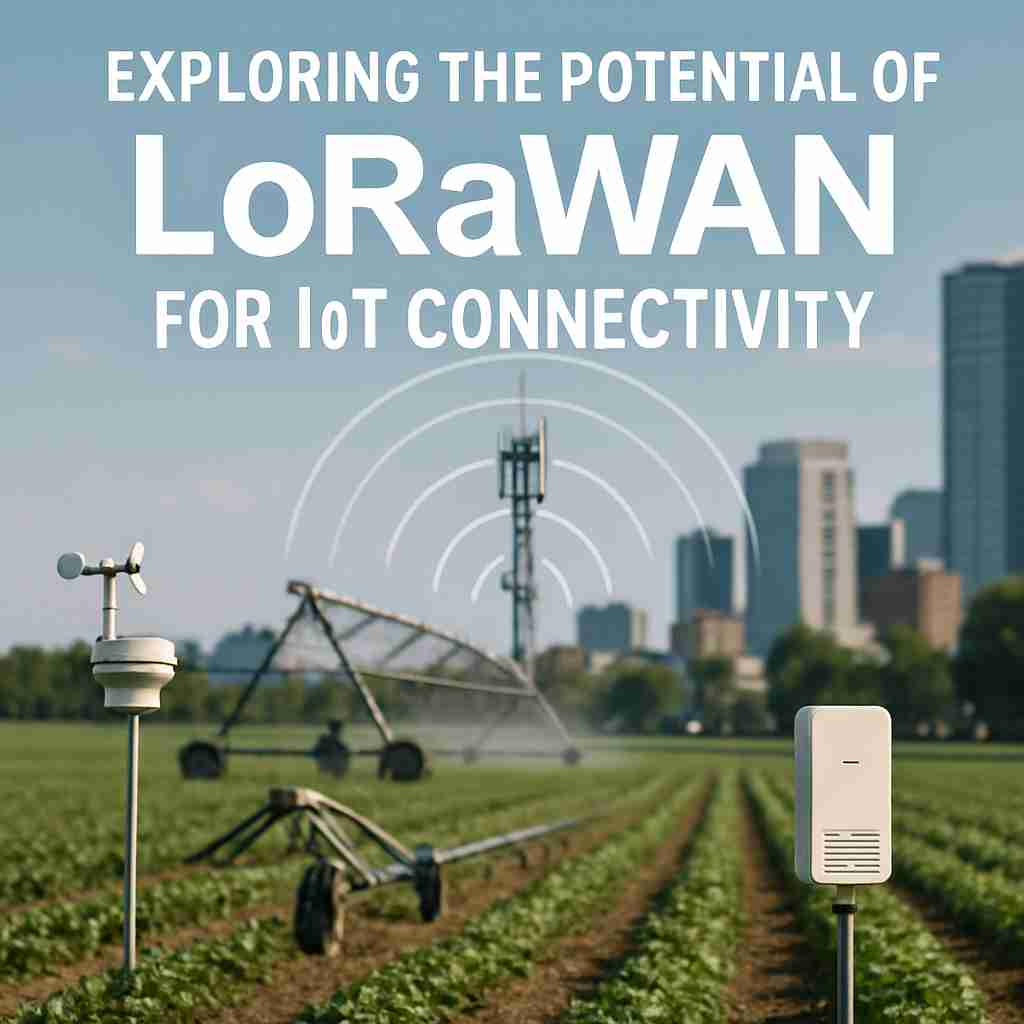
LoRaWAN, or Long-Range Wide Area Network, marks a significant evolution in IoT wireless communication systems due to its capability for long-distance wireless connectivity. This piece explores the fundamental characteristics of LoRaWAN, highlights its part in supporting energy-efficient wide-area networks, and examines its influence on IoT use cases. Learn how these innovations are transforming connectivity for distributed IoT device connectivity and power-saving IoT solutions around the globe.
The Core Technology: Understanding LoRaWAN
In the realm of LoRa technology, which drives the physical layer vital for LoRaWAN’s operation, the Internet of Things wireless networking landscape finds its foundation. This distinctive technology forms the communication framework, enabling extended-range IoT connectivity with minimal power consumption that supports diverse IoT gadgets. What makes LoRaWAN exceptional is its utilization of license-free frequency bands like 433 MHz, 868 MHz, and 915 MHz, allowing expansive coverage without costly licensing requirements. By employing chirp-based spread spectrum modulation, LoRa tech enhances both signal reach and energy efficiency. This modulation approach enables signals to cover longer distances using little power, perfectly suited for distributed IoT device connectivity.
At the heart of LoRa’s framework is the capability to manage thousands of devices linked to a single gateway, which is a critical factor in LoRaWAN network scalability across enormous sensor ecosystems. Acting as the physical layer, LoRa facilitates data communication, while the LoRaWAN protocol governs the secure and dependable delivery of information, applicable in sectors ranging from smart metropolitan sensor arrays to advanced farming technology. Consequently, LoRa technology not only fulfills but surpasses the requirements of energy-efficient wide-area networks, positioning itself as the cornerstone for expanding IoT wireless communication systems.
Harnessing the Power of LPWAN
Within the domain of LoRa technology, it firmly maintains its position by delivering both flexibility and LoRaWAN scalability in Internet of Things wireless networking solutions. Rather than relying on cellular protocols such as NB-IoT, it adopts a decentralized IoT networks method, enabling users individually to establish private LoRa networks that efficiently span broad regions. This feature positions it as a preferred option for industries requiring dependable communication across extensive areas without the steep expenses linked to cellular infrastructures.
LoRa’s distinct chirp spread spectrum modulation, which disperses signals over multiple frequency channels, boosts its immunity to disruptions, guaranteeing reliable data relay even under demanding conditions. Such resilience proves vital in metropolitan environments where numerous devices cause considerable wireless network interference. Moreover, due to the fact that LoRa technology operates within unlicensed frequency bands, it supports cost-efficient deployments for developers and enterprises by often eliminating the necessity for pricey spectrum licenses.
As urban areas transform into smart cities, fusing LoRa networks with additional technologies fosters smooth, multi-protocol IoT integration, essential for well-rounded IoT ecosystems. Whether applied in smart metering or environmental sensing, LoRa’s versatility enables customized solutions matching specific industry demands, reinforcing its significance in the expanding Internet of Things wireless connectivity landscape.
Applications of Long-Range IoT Connectivity
The transformative impact of LoRa technology spans multiple crucial sectors, facilitating connectivity in places where it was once out of reach. Within agriculture, this advanced farming technology enables sensors to relay critical information on soil moisture levels and crop vitality across vast distances, all while utilizing minimal power. This leads to improved resource utilization, guaranteeing that water and fertilizers are distributed efficiently and boosting overall crop yields.
In the logistics field, LoRa technology provides resilient IoT-based asset management platforms. Offering continuous insight into goods in transit, it supports inventory control and minimizes losses. Organizations can monitor containers over expansive geographical zones, enhancing the efficiency of supply chains.
LoRaWAN smart urban infrastructure is harnessed by smart cities to unify numerous municipal operations, including waste handling and street illumination, into a streamlined network. Sensor-derived real-time data facilitates adaptive lighting and optimized waste collection, which reduces expenses and elevates the quality of urban life.
Collectively, these sectors illustrate how extended-range IoT connectivity considerably enhances operational performance, decision processes, and resource governance, seamlessly linking the physical and digital realms.
IoT Connectivity Challenges and Solutions
Establishing IoT networks presents distinct Internet of Things connectivity problems concerning both connectivity and security. Communication reliability can be compromised in crowded settings or extensive metropolitan zones due to wireless communication interference from overlapping signals. The typical wireless technologies’ restricted range often limits device interaction across longer distances, which is crucial for sectors like precision agriculture technology or logistics. Another major issue to tackle is data protection, as IoT networks remain susceptible to unauthorized breaches.
LoRa technology effectively mitigates these challenges. Its ability for extended-range IoT connectivity supports communication over wide territories without needing elaborate infrastructure. Leveraging sub-gigahertz license-free frequency bands, LoRa technology reduces interference, ensuring more dependable signal delivery. Moreover, LoRaWAN communication encryption uses sophisticated cryptographic techniques to bolster data security, protecting networks from potential cyber threats.
Thanks to these innovations, IoT devices can sustain steady and secure connections even under demanding conditions. Consequently, industries can confidently implement IoT solutions, assured that their networks will stay durable and safe, promoting advancements in monitoring, tracking, and data administration across a variety of fields.
The Future of LPWAN and IoT
At the cutting edge of Internet of Things wireless networking, LoRaWAN offers remarkable potential for low-consumption IoT connectivity solutions that cover vast distances. As the scope of IoT wireless data transmission networks grows, efficiently transmitting data across wide regions becomes increasingly critical. Addressing these demands, LoRa technology employs low-energy wide-area networking, delivering unparalleled reach and affordability. Anticipate promising advancements ahead, including enhanced data speeds that will enable a wider variety of IoT wireless connectivity applications and expand real-time IoT telemetry transmission capabilities. Moreover, the use of expanded, license-free frequency bands will provide greater adaptability to meet diverse regional regulations and standards. As diverse Internet of Things wireless protocols converge within expanding IoT landscapes, LoRaWAN is positioned to integrate effortlessly, boosting performance within intricate, multi-layered networks.
Another thrilling dimension lies in its integration with various IoT communication platforms. Collaborating with Wi-Fi, Bluetooth, or cellular networks, LoRa technology fortifies IoT ecosystems to be more adaptive, durable, and efficient. Upcoming innovations are set to transform IoT infrastructures profoundly by not only enhancing connectivity but also by reducing costs and improving energy optimization. As the globe moves toward a more interlinked future, the progression of LoRaWAN will undoubtedly influence the direction of Internet of Things wireless communication systems.
Conclusions
LoRaWAN and low-power wide-area networks are transforming IoT wireless communication by delivering long-distance, energy-efficient solutions ideal for diverse applications. As businesses increasingly depend on IoT for improved productivity and insights, these platforms offer a sustainable method to link extensive arrays of gadgets. Their ongoing progress heralds promising prospects for future of global IoT connectivity.